
Why Artificial Grass Is So Low Maintenance
One of the main reasons homeowners choose artificial grass is the dramatic reduction in garden maintenance. A natural lawn can look attractive when it is healthy and well cared for, but keeping it that way takes time, effort and regular attention throughout the year. Mowing, edging, feeding, reseeding, watering and repairing worn areas can all become part of the routine.
Artificial grass removes most of those jobs.
Once it has been professionally installed over a properly prepared base, an artificial lawn can provide a neat, green surface without the constant upkeep associated with natural turf. It still benefits from occasional cleaning and brushing, but the overall maintenance requirement is much lower.
For busy households, families with children, dog owners, older homeowners or anyone who simply wants to spend less time maintaining the garden, this can be a major advantage.
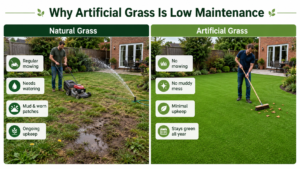
No More Lawn Mowing
The most obvious maintenance saving is that artificial grass never needs mowing.
Natural grass grows continuously during the warmer months and often needs cutting every week or two to keep it looking tidy. In periods of warm, wet weather, growth can be even faster.
That means regular work involving:
- Getting the mower out
- Cutting the lawn
- Emptying grass clippings
- Trimming around edges
- Cleaning the mower
- Storing garden machinery
- Disposing of cut grass
With artificial grass, all of this disappears.
The lawn stays at the same height throughout the year, so there is no weekly mowing schedule to keep up with.
For people with larger gardens, this can save a significant amount of time over the course of a year.
No Need for Watering
Natural lawns can require regular watering during long periods of dry weather.
Without enough water, grass can become dry, patchy and brown. Some homeowners spend considerable time watering their lawns with hoses or sprinklers to keep them looking green.
Artificial grass does not need watering to maintain its appearance.
The fibres remain green regardless of dry weather, so there is no need to water the lawn simply to stop it drying out.
You may still occasionally rinse the surface for cleaning purposes, particularly in pet-friendly gardens or after dusty weather, but this is very different from regular lawn watering.
This can make artificial grass particularly appealing for homeowners who want a more predictable, low-maintenance garden.
No Fertilising
Natural grass often needs feeding if homeowners want to maintain a dense and healthy appearance.
Lawn fertilisers may be applied at different times of year to encourage growth, improve colour or help the grass recover from damage.
Artificial grass does not grow, so it does not require fertiliser.
This removes another regular maintenance task as well as the need to buy, store and apply lawn feed products.
No Reseeding Bare Patches
Natural turf can develop worn or bare areas for many reasons.
Common causes include:
- Heavy foot traffic
- Children playing
- Football goals
- Pets
- Poor drainage
- Shade
- Dry weather
- Garden furniture
- General wear
Repairing these areas can involve loosening the soil, applying grass seed, watering regularly and preventing people or pets from walking on the repair until the new grass has established.
Artificial grass does not suffer from bare patches in the same way.
When installed correctly, the surface remains consistent even in frequently used sections of the garden.
This can be especially useful for family lawns and gardens with dogs.
No Muddy Patches to Repair
Mud is one of the most frustrating problems associated with natural grass.
Once a lawn becomes worn, exposed soil can quickly turn into mud during wet weather.
Repeated walking, pets and children can make the problem worse, leaving areas that may need repairing every spring or summer.
A properly installed artificial lawn eliminates the exposed soil from the finished surface.
With suitable drainage underneath, rainwater can pass through the grass while the surface remains much cleaner.
That means less time repairing muddy areas and less mess being carried into the house.
No Lawn Edging
Natural grass does not always stay neatly inside the area where you want it.
Edges can spread into borders, over paving or around stepping stones, making regular trimming necessary.
Artificial grass is installed to defined edges, so it does not spread or grow beyond the lawn area.
Once the perimeter is correctly secured and finished, there is no need for constant edging.
This helps keep the garden looking neat with much less effort.
No Seasonal Lawn Treatments
Maintaining natural grass often involves different jobs throughout the year.
A homeowner may need to change their lawn care routine depending on the season.
Artificial grass removes many of these seasonal tasks.
| Natural Lawn Task | Artificial Grass Requirement |
|---|---|
| Weekly mowing | Not required |
| Lawn feeding | Not required |
| Watering | Not required for growth |
| Reseeding | Not required |
| Scarifying | Not normally required |
| Aerating | Not required |
| Treating bare areas | Not required |
| Edge trimming | Not required |
| Grass clipping disposal | Not required |
| Seasonal lawn restoration | Not required |
This does not mean artificial grass is completely maintenance-free, but the difference in workload can be substantial.
What Maintenance Does Artificial Grass Need?
Artificial grass is best described as low maintenance rather than no maintenance.
It still benefits from occasional care.
Typical maintenance may include:
- Removing leaves
- Picking up twigs
- Brushing the fibres
- Rinsing dusty areas
- Cleaning spills
- Removing pet waste
- Checking edges
- Removing occasional weeds
These jobs are generally quick and do not need to be done as frequently as the maintenance required by natural turf.
Easy Leaf Removal
Leaves can still fall onto an artificial lawn, especially in gardens with nearby trees and shrubs.
The difference is that you do not need to worry about cutting the grass underneath.
Leaves can simply be removed using:
- A soft garden brush
- A plastic rake
- A leaf blower
- By hand in smaller gardens
It is a good idea to remove leaves periodically rather than letting large amounts of organic material build up.
This helps keep the lawn tidy and reduces the chance of seeds or debris settling between the fibres.
Simple Brushing
Artificial grass fibres can flatten slightly in areas that receive regular use.
Occasional brushing can help lift the pile and keep the grass looking fresh.
A stiff but suitable non-metal brush is generally sufficient.
Brushing against the direction of the pile can help stand the fibres upright.
This does not need to be done constantly.
For most residential gardens, occasional brushing in high-traffic areas is enough.
Easy Cleaning
Most everyday dirt can be removed easily from artificial grass.
Rain will naturally help rinse the surface, but during dry periods you can hose the lawn occasionally if needed.
For spills, a mild suitable cleaning solution may be used depending on the grass manufacturer’s recommendations.
It is generally best to deal with spills sooner rather than later.
Artificial grass does not need polishing, sealing or painting, which keeps maintenance straightforward.
Low Maintenance for Dog Owners
Artificial grass can be particularly useful for households with dogs.
Natural grass can quickly become muddy and worn when used regularly by pets.
Artificial grass removes many of those problems, but pet gardens do require some specific maintenance.
Dog waste should be removed promptly.
Areas used regularly for urination should also be rinsed periodically.
A suitable pet-safe artificial grass cleaner or enzyme-based product may be used when necessary to help control odours.
Where the artificial grass has been installed with good drainage and an appropriate base, cleaning is relatively simple.
For many dog owners, this is still considerably easier than dealing with mud, urine-burnt natural grass and worn areas.
Low Maintenance for Families
Family gardens often experience heavy use.
Children may run, play football, use paddling pools or move toys around the lawn.
Natural grass can become worn under this type of activity.
Artificial grass stays much more consistent.
There is no need to reseed goalmouth areas or protect newly repaired patches.
The result is a lawn that can be used without constantly worrying about damage.
Green Throughout the Year
Artificial grass also reduces maintenance because its appearance is consistent.
Natural lawns can look different depending on:
- Temperature
- Rainfall
- Drought
- Shade
- Foot traffic
- Soil condition
- Season
Artificial grass does not rely on growing conditions.
It stays green throughout the year without needing feeding or watering.
This makes it much easier to keep the garden looking tidy.
Less Garden Equipment Needed
A natural lawn often requires several tools and products.
These may include:
- Lawn mower
- Strimmer
- Lawn edging tool
- Hose
- Sprinkler
- Grass seed
- Fertiliser
- Scarifier
- Aerator
- Lawn treatment products
Artificial grass can reduce the amount of equipment you need.
In many cases, a brush, hose and basic cleaning products are enough for routine care.
This can free up space in sheds and garages while reducing ongoing equipment costs.
Less Time Spent on Garden Chores
One of the most important benefits is time.
Natural lawn care may only take an hour or two at a time, but those hours add up over the year.
A weekly mowing schedule through spring and summer can involve many hours of work.
Artificial grass gives that time back.
Instead of cutting and maintaining the lawn, homeowners can spend more time using the garden.
This can be especially valuable for people with busy work schedules, families or limited mobility.
Ideal for Holiday Homes and Rental Properties
Artificial grass can also be useful for properties that are not occupied every day.
Holiday homes, rental properties and second homes can be difficult to maintain if there is no one available to mow the lawn regularly.
Artificial grass removes the problem of returning to an overgrown garden.
It provides a predictable appearance with relatively little routine maintenance.
Helpful for Older Homeowners
Natural lawn maintenance can become more difficult as people get older.
Pushing a mower, lifting equipment and bending to trim edges may become uncomfortable or impractical.
Artificial grass removes many of these physical tasks.
Occasional brushing and cleaning are generally easier to manage than regular mowing and lawn treatment.
For homeowners who want to continue enjoying a garden without demanding maintenance, this can be an important benefit.
Maintenance Comparison
Here is a simple comparison:
| Job | Natural Grass | Artificial Grass |
|---|---|---|
| Mowing | Regular | None |
| Watering | Often needed | Not for growth |
| Fertilising | Usually required | None |
| Reseeding | Sometimes | None |
| Mud repair | Common in wet areas | Generally avoided |
| Edge trimming | Regular | None |
| Scarifying | Periodically | None |
| Aerating | Sometimes | None |
| Leaf removal | Yes | Yes |
| Brushing | No | Occasionally |
| Pet cleaning | Yes | Yes |
| Appearance | Seasonal | Consistent |
Why Good Installation Reduces Maintenance
The amount of maintenance required also depends heavily on the quality of the installation.
A professionally prepared artificial lawn should have:
- A stable sub-base
- Accurate levels
- Effective drainage
- Secure edges
- Proper joins
- Suitable membranes
- A smooth finishing layer
Poor installation can lead to movement, standing water, loose edges or visible joints.
That can create extra maintenance later.
Good preparation reduces the likelihood of these problems.
This is why artificial grass should not simply be laid over an existing lawn without proper groundwork.
Low Maintenance Does Not Mean Poor Quality
Some people assume that because artificial grass requires less maintenance, it must be a compromise.
In reality, the reduction in maintenance is one of its main advantages.
The grass is manufactured to retain its shape and colour without the biological processes required by natural turf.
With the right product and installation, it can provide a very practical garden surface.
The key is choosing artificial grass suitable for the way the garden will be used.
A Practical Choice for Busy Gardens
Artificial grass is especially suitable for gardens that need to remain usable without constant attention.
It can work well for:
- Family gardens
- Dog-friendly gardens
- Small urban gardens
- Rental properties
- Older homeowners
- Busy households
- Gardens with poor natural grass growth
- Areas that become muddy
- Heavily used lawns
For these situations, the reduction in maintenance can be significant.
Enjoy the Garden Instead of Maintaining It
The main advantage of low-maintenance artificial grass is simple: you spend less time looking after the lawn and more time enjoying the garden.
There is no mowing, feeding, watering, scarifying or reseeding.
There are fewer muddy patches to repair and no weekly battle to keep the grass at the right height.
Artificial grass still needs some care, but the routine is much simpler.
Occasional brushing, removal of leaves and suitable cleaning are generally all that is required to keep a well-installed lawn looking tidy.
For homeowners who want a green, practical and low-maintenance garden throughout the year, artificial grass can provide an effective solution without the constant workload associated with natural turf.
