
Advantages of Child-Friendly Artificial Grass
Creating a garden that children can enjoy throughout the year can be difficult when natural grass becomes muddy, worn or waterlogged. Child-friendly artificial grass provides a practical alternative, giving families an attractive and usable lawn without many of the problems associated with traditional turf.
Modern artificial grass is designed to look and feel much more natural than older synthetic lawns. When a suitable product is professionally installed with the correct groundwork and drainage, it can create a comfortable outdoor space for children to play, run and enjoy the garden in many different weather conditions.
Here are some of the main advantages of choosing child-friendly artificial grass for a family garden.
No More Muddy Mess
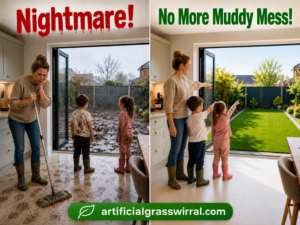
One of the biggest advantages for families is no more muddy lawn.
Natural grass can quickly become soft and muddy after heavy rain, especially in areas where children regularly play. Football, garden games, climbing equipment and general running around can soon turn a lawn into a patchy mixture of grass, bare soil and mud.
That mud rarely stays outside.
Children can bring muddy shoes, clothes, footballs, toys and even pets back into the house, resulting in dirty floors, carpets and furniture.
Artificial grass removes the exposed soil associated with worn natural lawns. With a properly installed base and effective drainage, rainwater can move through the surface while the lawn remains much cleaner underfoot.
This means children can enjoy the garden without parents constantly worrying about muddy footprints being carried into the house.
For busy households, reducing garden mud can make a noticeable difference to everyday cleaning.
A Garden Children Can Use More Often
A natural lawn can become difficult to use during wet weather.
After prolonged rainfall, parents may have to keep children away from the grass until the ground dries because playing on it could damage the lawn or create even more mud.
Artificial grass provides a more consistent surface throughout the year.
Although weather conditions should always be taken into account, a correctly drained artificial lawn can generally become usable again much sooner after rain than a waterlogged natural lawn.
This can be particularly useful for families with energetic children who enjoy spending time outside.
Instead of treating the garden as something that can only be enjoyed during dry summer weather, artificial grass can help create a more practical outdoor play space across much of the year.
No Bare or Worn Patches
Children tend to use the same parts of a garden repeatedly.
Areas around football goals, swings, climbing frames, paddling pools and garden entrances can quickly become worn.
Natural turf may struggle to recover where it experiences constant foot traffic, leaving bare patches and exposed soil.
Artificial grass does not grow, so repeated use does not create the same worn patches associated with natural turf.
This makes it particularly useful in smaller family gardens where children may spend a lot of time playing within a relatively compact space.
The lawn can maintain a much more consistent appearance even when particular areas receive regular use.
Less Garden Maintenance
Natural grass requires ongoing care.
During the growing season, it needs mowing regularly. There may also be edging, reseeding, feeding and other maintenance to consider.
For parents with young children, spending free time maintaining the lawn may not be particularly appealing.
Artificial grass removes the need for mowing and significantly reduces routine lawn maintenance.
You will still need to look after the surface by removing leaves and garden debris and occasionally brushing or cleaning it, but the overall maintenance requirements are usually much lower than natural grass.
That means less time working on the lawn and more time actually enjoying the garden.
No Lawn Mower Around Children
Removing the need to mow also means you don’t need to regularly bring a lawn mower into the children’s play area.
Lawn mowers and other powered garden equipment should always be kept away from children when in use.
With artificial grass, routine mowing is no longer necessary, which removes one regular garden task involving machinery.
It can also make storage easier if your lawn mower was previously taking up valuable space in a shed or garage.
A Cleaner Surface for Outdoor Play
Children often spend much more time close to the ground than adults.
They sit on the lawn, play with toys, crawl, run and take part in garden games.
Artificial grass can provide a relatively clean and consistent surface for this type of everyday play.
Toys are less likely to become covered in soil, and picnic blankets, garden games and outdoor furniture can be placed on the lawn without sitting directly on damp earth.
Parents should still clean the surface when necessary, particularly after spills, pet use or fallen garden debris, but day-to-day outdoor play can become considerably less messy.
Suitable for Play Equipment
Artificial grass can provide an attractive surface around many types of garden play equipment.
This might include:
- Swings
- Slides
- Climbing frames
- Playhouses
- Football goals
- Garden games
Where additional impact protection is required, specialist shock pad systems may be installed beneath suitable artificial grass products.
The requirements depend on the type and height of the play equipment, so families looking for a safety-focused play surface should choose products and underlays intended for that specific application.
Artificial grass itself should not automatically be assumed to provide fall protection. The full installation needs to be designed appropriately if critical fall-height protection is required.
Soft and Comfortable Underfoot
Many modern artificial grass products are designed with softer fibres, making them more comfortable for family gardens than older synthetic surfaces.
Choosing the right pile height, density and fibre type can create a lawn that feels pleasant underfoot and is suitable for everyday garden use.
For families with younger children who regularly sit or play on the lawn, it is worth choosing an artificial grass specifically intended for residential and family environments rather than selecting a product purely on appearance.
Seeing and feeling samples before installation can help you choose the most appropriate option.
Good Drainage When Properly Installed
Drainage is an important part of any artificial grass installation.
The lawn itself is only one component of the finished system. The ground beneath it must also be prepared correctly so water can drain appropriately.
A professionally prepared artificial lawn can help prevent the waterlogged conditions commonly associated with heavily used natural lawns.
Good drainage is particularly valuable in family gardens because standing water and muddy patches can restrict how often children can use the space.
Every garden is different, however, so existing drainage conditions should be assessed before installation.
No Need for Lawn Fertilisers
Maintaining natural grass can involve lawn feeds, weed treatments and other products.
Artificial grass does not need fertiliser to remain green and does not require weedkiller simply to maintain the appearance of the lawn itself.
Some weed management may still occasionally be needed around borders or if airborne seeds establish themselves in debris on the surface, but routine lawn feeding is eliminated.
For households that prefer to reduce the number of lawn-care products stored and used around the garden, this can be another practical advantage.
Ideal for Football and Garden Games
Family lawns often have to cope with much more than simply looking attractive.
Football, cricket, catch, garden toys and other activities can be hard on natural turf.
Artificial grass can tolerate regular recreational use without developing the same goal-mouth mud, bare pathways and worn patches commonly seen on natural family lawns.
For football-loving children in particular, this can make the garden far more practical.
Instead of constantly moving goals around to prevent worn areas, children can enjoy the space while the lawn retains a consistent appearance.
Looks Green Throughout the Year
Natural lawns naturally change throughout the seasons.
They can become patchy during heavy use, brown during periods of dry weather and muddy during wetter months.
Artificial grass maintains its green appearance throughout the year.
For parents, this means the children’s play area can also remain an attractive part of the garden even during periods when natural lawns might look tired or damaged.
This can be especially useful in smaller gardens where the lawn occupies a large proportion of the visible outdoor space.
Great for Small Family Gardens
Artificial grass can be particularly effective in compact gardens.
A small natural lawn that receives constant foot traffic may struggle to remain healthy because there simply isn’t enough space for heavily used areas to recover.
Artificial grass makes it possible to dedicate most or all of a smaller lawn to everyday family use.
It can also be combined with porcelain paving, patio areas, raised beds and children’s play zones to create a low-maintenance garden with clearly defined spaces.
Easier to Keep the Garden Looking Tidy
Family gardens are busy spaces, and they do not always stay picture-perfect.
Artificial grass cannot organise children’s toys for you, but it does remove many of the appearance problems caused by worn natural turf.
Without muddy patches, uneven grass growth and bare areas, the garden can retain a neater overall appearance.
A quick removal of toys and leaves can often make the lawn look presentable again without needing to mow or repair damaged turf.
Child-Friendly Artificial Grass for a More Usable Family Garden
For many families, the biggest benefit of artificial grass is simple: the garden becomes easier to use and easier to manage.
Children can enjoy a consistent play surface, parents have less lawn maintenance to deal with, and one of the biggest frustrations of a heavily used family garden — mud being carried through the house — can be dramatically reduced.
With the right artificial grass, appropriate groundwork and professional installation, a family garden can become a cleaner, lower-maintenance and more practical outdoor space that children can enjoy throughout much more of the year.
