
Choosing experienced artificial grass fitters in Wirral can make a significant difference to how an artificial lawn looks, drains and performs over time. While the grass itself is important, the quality of the groundwork and installation is usually what determines whether the finished lawn remains smooth, secure and attractive for years to come.
Artificial grass is often chosen by homeowners who want a cleaner, lower-maintenance alternative to natural turf. It can be especially useful in gardens that become muddy in winter, shaded areas where natural grass struggles to grow, family gardens that receive heavy use and outdoor spaces used regularly by dogs. However, a successful installation requires much more than simply laying artificial turf over an existing lawn.
A professional artificial grass fitter should assess the ground, plan the drainage, prepare a stable base, install suitable edging and fit the grass carefully so that joins are discreet and the finished surface looks natural.
One of the most common mistakes with artificial grass is focusing only on the appearance of the grass itself. In reality, the preparation underneath the turf is just as important.
A well-installed artificial lawn normally requires the existing grass, soil or unsuitable surface material to be removed to the correct depth. The ground must then be prepared using suitable aggregates that can be compacted to create a stable and free-draining base.
If this work is rushed or completed incorrectly, problems can develop later. The surface may become uneven, dips can appear, water may collect in certain areas and the grass may move around the edges. Poorly prepared ground can also allow weeds to appear around joins and boundaries.
Experienced artificial grass fitters in Wirral should therefore spend considerable time on the preparation stage before the artificial turf itself is installed.
Every garden is different, but a typical artificial grass installation follows several important stages.
The first stage is usually a site assessment. The installer will measure the proposed lawn area and inspect the existing ground. They should consider access, drainage, soil condition, nearby patios, walls, fences, flower beds and any other features that may affect the installation.
The existing turf is then removed, along with enough soil to create space for the new sub-base system. The depth required can vary depending on the condition of the garden and how the area will be used.
A suitable edging system is normally installed around the perimeter. This gives the artificial grass something secure to fix to and helps create neat, consistent edges around paths, patios, flower beds and fences.
A compacted aggregate sub-base is then added. This helps create a firm foundation while allowing water to drain through the installation. A finer layer may then be used to create a smooth surface before the artificial grass is fitted.
Depending on the installation method, a weed membrane may also be used. This can help reduce the risk of weeds growing through the finished lawn while still allowing drainage.
Once the groundwork has been completed, the artificial grass is rolled out and positioned carefully. The direction of the pile is important because artificial grass usually looks best when the fibres face towards the main viewing area.
If more than one piece of grass is required, the sections must be joined carefully. Good joins should be difficult to notice once the installation has been completed.
The perimeter is then trimmed and fixed securely before the fibres are brushed into position.
Drainage is one of the most important considerations when installing artificial grass in Wirral.
Artificial turf is normally manufactured with drainage holes that allow rainwater to pass through the surface. However, the grass can only drain effectively if the ground underneath has been prepared correctly.
A suitable sub-base helps water move away from the surface rather than collecting beneath the lawn. This is particularly important in gardens with heavy or poorly draining soil.
Before installation, a fitter should look for signs of existing drainage problems. If a garden already suffers from standing water after heavy rain, simply covering the area with artificial grass will not solve the underlying problem.
In some cases, additional drainage work may be required before the lawn is installed.
Artificial grass can be a practical option for dog owners because it does not become muddy in the same way as natural turf.
Dogs can run and play on the surface throughout the year without creating bare patches or worn areas. Muddy paw prints are also significantly reduced, which can be particularly helpful during wet weather.
However, pet-friendly artificial grass installation requires careful attention to drainage and cleaning.
Dog urine should be able to drain through the grass and into the prepared base below. A suitable installation can help prevent liquid from remaining trapped near the surface.
Owners should still rinse areas used regularly by pets and remove solid waste promptly. Specialist artificial grass cleaners and enzyme treatments can also be used where necessary.
If you are choosing artificial grass specifically for dogs, mention this to the fitter before work begins so that the installation can be planned appropriately.
Families often choose artificial grass because it provides a usable outdoor surface throughout much of the year.
Natural lawns can become muddy, patchy or worn in areas where children regularly play. Artificial grass does not require mowing and can cope well with repeated foot traffic when installed correctly.
It can be used around climbing frames, seating areas, garden furniture and other everyday garden features.
However, parents should consider how hot artificial grass can become during very warm weather. Like many outdoor surfaces, artificial turf can heat up in direct sunlight. Shade, watering or avoiding the surface during the hottest periods may be sensible on exceptionally warm days.
Artificial grass is available in many different styles.
Some products have shorter, denser fibres that create a neat, freshly cut appearance. Others use longer fibres to create a softer and more natural look.
The right option depends on how the area will be used.
A decorative front garden may have different requirements from a lawn used every day by children and pets. A heavily used garden may benefit from a durable, resilient product, while a quieter garden may prioritise softness and appearance.
When comparing products, consider pile height, density, colour variation, softness, durability and the manufacturer’s intended use.
A good installer should allow you to see and feel several samples before making a final decision.
One of the main benefits of artificial grass is that it requires less maintenance than natural turf, but it is not completely maintenance-free.
Leaves, twigs and other debris should be removed regularly using a plastic rake, leaf blower or stiff brush.
The fibres may occasionally need brushing to help keep them upright, particularly in areas that receive frequent foot traffic.
Any spills should be cleaned as soon as possible, while pet areas may need occasional rinsing and treatment with a suitable artificial grass cleaner.
Edges should also be checked periodically to make sure the grass remains secure.
With sensible maintenance, a professionally installed artificial lawn can continue looking tidy for many years.
Artificial grass can often be installed over existing concrete, paving or other solid surfaces, although the preparation is different from installing it over soil.
The existing surface must be reasonably sound and drainage must be considered carefully.
If water cannot escape from the area, additional drainage measures may be needed.
A cushioning underlay can sometimes be installed between the concrete and artificial grass to create a softer surface.
This type of installation can be useful for courtyards, balconies, small patios and other areas where removing the existing hard surface would be unnecessary.
Installation times vary according to the size and condition of the garden.
A small, straightforward lawn may be completed relatively quickly, while a large garden requiring extensive excavation, drainage or landscaping work will take longer.
Access can also affect the duration of the job. Gardens with narrow side entrances or limited access may require soil and aggregates to be moved by hand.
A professional fitter should be able to give you an estimated timescale after inspecting the site.
The cost of artificial grass installation varies significantly because every garden is different.
Several factors influence the final price, including the size of the lawn, the type of grass selected, the amount of excavation required, access to the garden, edging requirements, drainage work and the condition of the existing ground.
When comparing quotes, it is important to understand exactly what is included.
A cheaper quotation may not include the same depth of groundwork, waste removal, edging or drainage preparation as a more detailed quotation.
Ask installers to explain their proposed ground preparation and the materials they intend to use rather than comparing prices based only on the final cost per square metre.
Before choosing an installer, ask what preparation will be carried out beneath the lawn.
You may also want to ask:
What type of sub-base will be used?
How will drainage be handled?
What edging system will be installed?
How will the grass be secured?
Is removal of existing turf and waste included?
What happens if the garden already has drainage problems?
Can you see examples of previous installations?
Is there a workmanship guarantee?
What maintenance will be required after installation?
A professional fitter should be comfortable explaining the installation process clearly.
A successful artificial grass installation starts beneath the surface.
Good groundwork, appropriate drainage, secure edging and careful fitting are just as important as choosing an attractive artificial grass product.
For homeowners considering artificial grass fitters in Wirral, it is worth choosing an installer based on the quality of the complete installation rather than simply looking for the lowest quotation.
A properly prepared artificial lawn can provide a clean, practical and attractive outdoor space that can be used throughout the year, with significantly less maintenance than a traditional natural lawn.
Call for a free quote and advice 0151 606 9523
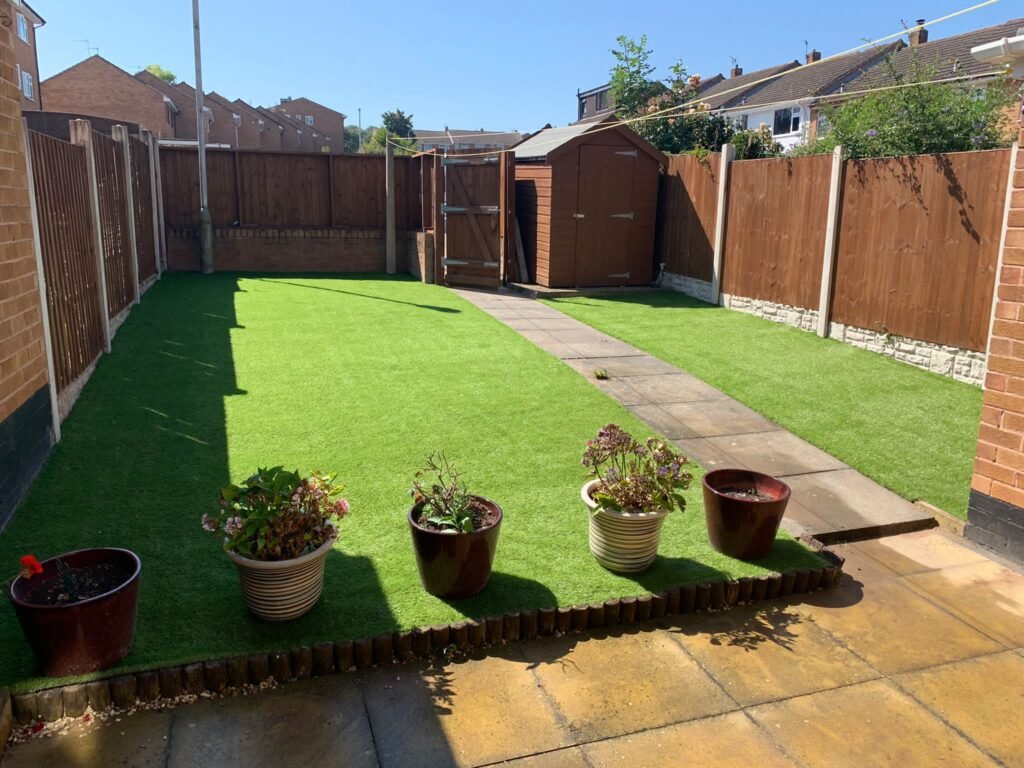

1.Transform your garden into a beautiful Oasis.
2. No more Mowing.
3. No More Muddy Mess.
4. Child Friendly.
5. Dog & Pet Friendly