
Artificial Grass Supply and Fit in Neston
If you are looking for professional artificial grass supply and fitting in Neston, a professionally installed artificial lawn can give you a neat, practical and attractive outdoor space without the constant mowing, watering and maintenance associated with natural grass.
Artificial grass is suitable for a wide range of gardens and outdoor areas, from small family gardens and courtyards to larger landscaped spaces, rental properties, commercial premises and play areas.
We provide artificial grass solutions for customers in Neston and surrounding areas, helping homeowners and businesses create lawns that look tidy throughout the year and are designed to cope with everyday use.
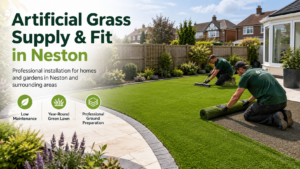
Artificial Grass Installation in Neston
A good artificial lawn is about much more than simply laying synthetic turf over the existing ground. Proper preparation is essential if you want the finished lawn to remain level, drain correctly and look good for years to come.
A professional artificial grass installation will normally include removing the existing surface, preparing the ground, installing suitable sub-base materials, creating a stable laying surface and carefully fitting the artificial grass.
The exact installation method will depend on your garden, soil conditions, drainage and how the finished area will be used.
Typical artificial grass installation process
- Site assessment
The existing garden or outdoor area is assessed to determine the size of the lawn, ground conditions, drainage requirements and access.
- Removal of existing turf
Existing grass, weeds and unwanted surface material are removed to create space for the new base.
- Ground preparation
The area is excavated to the required depth and prepared for the artificial lawn system.
- Installation of the sub-base
Suitable aggregate is installed and compacted to provide a firm and stable foundation.
- Levelling layer
A finer aggregate or laying material may be used to create a smooth surface before the grass is installed.
- Weed membrane
A suitable membrane can be incorporated into the installation to help reduce unwanted weed growth.
- Artificial grass fitting
The grass is positioned carefully, cut to shape and joined where necessary.
- Edges secured
The perimeter of the lawn is finished and secured to help prevent movement.
- Final brushing and finishing
The pile is brushed into position and the installation is checked to ensure a neat, professional finish.
Why Choose Artificial Grass?
Artificial grass has become increasingly popular with homeowners looking for a lawn that is easier to manage.
Unlike natural grass, it does not need regular mowing, feeding or watering and is not affected by many of the seasonal problems that can leave traditional lawns looking muddy, patchy or worn.
Benefits of artificial grass
- No mowing required
- No lawn watering
- No fertiliser or lawn feeding
- Reduced garden maintenance
- Attractive appearance throughout the year
- No muddy lawn after wet weather
- Suitable for children and family gardens
- Suitable for many pet-friendly garden designs
- Useful for shaded areas where natural grass struggles
- Ideal for small or difficult-to-maintain gardens
- Can be combined with patios, paving and landscaped areas
- Available in a range of pile heights and styles
Artificial Grass vs Natural Grass
Before deciding whether artificial grass is right for your garden, it can be helpful to compare the two options.
| Feature | Artificial Grass | Natural Grass |
|---|---|---|
| Regular mowing | Not required | Required |
| Watering | Usually not required | Often required in dry weather |
| Mud | Significantly reduced with correct installation | Common during wet conditions |
| Seasonal appearance | Consistent throughout the year | Changes with seasons and weather |
| Fertilising | Not required | Often required |
| Weed management | Reduced but occasional weeds may still appear | Regular maintenance often needed |
| Initial installation cost | Usually higher | Usually lower |
| Ongoing maintenance | Relatively low | Regular |
| Shaded areas | Can work well | Grass may struggle |
| Heavy use | Suitable products can cope well | Can become worn or muddy |
Artificial grass is not completely maintenance-free, but the amount of work required is generally much lower than maintaining a traditional lawn.
Artificial Grass for Large Family Gardens
For many households in Neston, the biggest advantage of artificial grass is being able to use the garden more regularly.
Natural lawns can quickly become muddy during periods of heavy rain, particularly where children regularly play or where foot traffic is concentrated around patios, sheds, gates and garden buildings.
Artificial grass can provide a cleaner and more consistent surface.
A family garden installation can also be designed around existing features such as:
- Patios
- Decking
- Raised flower beds
- Garden paths
- Sheds
- Summer houses
- Children’s play equipment
- Garden offices
- Seating areas
- Hot tubs
- Decorative borders
The result can be a practical outdoor space that still retains planted areas and landscaping.
Artificial Grass for Pets
Artificial grass is also popular with dog owners who want to reduce muddy footprints and worn patches.
When artificial grass is intended for pets, drainage and preparation are particularly important.
The lawn should be installed on an appropriate free-draining base, and the garden should still be cleaned regularly.
Solid waste should be removed in the normal way, while the surface can be rinsed when necessary.
Pet owners should discuss how the lawn will be used before installation so the most appropriate grass and installation system can be selected.
Artificial Grass for Small Gardens
Artificial grass can work particularly well in smaller gardens.
A neat artificial lawn can provide a strong visual centrepiece without taking up large amounts of time maintaining a relatively small patch of natural grass.
It can also be combined with paving or borders to create a more structured design.
For example:
| Area | Possible Treatment |
|---|---|
| Main lawn | Artificial grass |
| Seating area | Patio or paving |
| Garden edges | Decorative stone or planting |
| Path | Paving slabs |
| Storage area | Hardstanding |
| Children’s area | Artificial grass with appropriate groundwork |
Careful planning can make even a compact garden feel more organised and usable.
Artificial Grass for Larger Gardens
Larger artificial lawns require particularly careful ground preparation.
The installer needs to consider levels, drainage, joins and the direction of the grass pile.
Where multiple rolls are required, joins must be positioned and installed carefully so that they are as unobtrusive as possible.
For larger spaces, it can also be effective to combine artificial lawn areas with other landscaping materials rather than covering the entire garden.
This can create a more natural and varied design while keeping maintenance manageable.
Choosing the Right Artificial Grass
Artificial grass is available in many different styles.
The best option is not necessarily the most expensive or the grass with the longest pile.
The correct choice depends on how you plan to use the area.
Important factors to consider
Pile height
Pile height affects the appearance and feel of the finished lawn. Shorter products can provide a neat, freshly cut appearance, while longer products may provide a softer or fuller look.
Density
The density of the fibres can influence how full the lawn looks and how it performs under regular use.
Colour
Artificial grass is available in different combinations of green and brown fibres. Products containing multiple shades can often create a more natural appearance.
Softness
If the garden will frequently be used by children or for sitting and relaxing, the feel of the grass may be particularly important.
Durability
Areas that receive significant foot traffic may benefit from a product designed for heavier use.
Good drainage is essential. The grass itself and, more importantly, the installation underneath it should allow rainwater to drain appropriately.
How Much Does Artificial Grass Installation Cost in Neston?
The cost of supplying and fitting artificial grass can vary considerably because every garden is different.
Factors affecting the final price can include:
- Size of the lawn
- Type of artificial grass selected
- Amount of excavation required
- Existing surface
- Access to the garden
- Drainage requirements
- Type and quantity of sub-base material
- Number of joins required
- Shape of the lawn
- Edging requirements
- Removal of waste material
- Additional landscaping work
A small rectangular garden with straightforward access will generally require less work than a large garden with difficult access, complicated shapes or drainage problems.
For this reason, the most accurate way to determine the cost is usually through a site visit and quotation.
Why Ground Preparation Matters
One of the most important parts of artificial grass installation is the work underneath the grass.
Poor ground preparation can cause a number of problems.
These can include:
- Uneven areas
- Movement underfoot
- Poor drainage
- Visible depressions
- Edges becoming loose
- Joins becoming noticeable
- Premature deterioration of the finished surface
The artificial grass itself may be the visible part of the project, but the quality of the base underneath it plays a major role in how the lawn performs.
Artificial Grass Drainage
Drainage should always be considered before artificial grass is installed.
Most artificial grass products are designed to allow water to pass through the surface, but that water still needs somewhere to go.
The underlying materials and existing garden conditions therefore matter.
Gardens with heavy soil or existing drainage problems may require additional consideration before installation.
A professional installer should assess the area rather than assuming the same installation method will work for every garden.
Artificial Grass Edging Options
A good artificial lawn also needs properly finished edges.
Depending on the garden design, artificial grass can be finished against:
- Paving
- Brickwork
- Timber edging
- Composite edging
- Concrete edging
- Raised beds
- Garden walls
- Decorative stone
- Existing paths
The appropriate edging method depends on the layout and installation system.
Artificial Grass Around Patios
Artificial grass and patios work well together and can create clearly defined areas within a garden.
A patio might provide space for dining and garden furniture while artificial grass creates a softer-looking central area.
When the lawn meets paving, accurate cutting and correct levels are important to achieve a clean transition.
Artificial Grass Around Garden Buildings
Artificial grass can also be fitted around:
- Sheds
- Summer houses
- Garden bars
- Garden offices
- Playhouses
- Pergolas
- Storage buildings
If a new garden building is planned, it is usually worth considering its position before the artificial grass is installed.
Planning the whole garden layout first can help avoid unnecessary alterations later.
Maintaining Artificial Grass
Artificial grass requires less maintenance than natural turf, but some occasional care is still recommended.
Simple artificial grass maintenance
- Remove leaves and garden debris
- Brush the grass occasionally to lift the pile
- Remove weeds if they appear around edges or through drainage holes
- Clean up after pets
- Rinse areas when required
- Avoid placing extremely hot objects directly on the grass
- Move heavy garden furniture occasionally if it is flattening the pile
- Check edges periodically
During autumn, leaves should be removed regularly so that they do not break down and accumulate within the grass fibres.
Can Artificial Grass Be Installed All Year Round?
Artificial grass installation can be carried out during much of the year, although weather conditions can affect groundworks and scheduling.
The condition of the ground is important because excavation, compaction and base preparation need to be completed correctly.
Many customers choose to have their gardens improved ahead of spring or summer, but artificial lawn projects are not limited to those seasons.
Where Can Artificial Grass Be Installed?
Artificial grass can be used in many different locations.
Common applications include:
| Application | Typical Benefit |
|---|---|
| Front gardens | Neat appearance with reduced maintenance |
| Back gardens | Practical year-round lawn |
| Children’s gardens | Reduced mud and worn areas |
| Pet gardens | Easier-to-manage outdoor surface |
| Courtyards | Adds greenery to hard landscaped areas |
| Rental properties | Reduces routine lawn maintenance |
| Commercial premises | Consistent appearance |
| Garden offices | Creates a tidy surrounding landscape |
| Play areas | Provides a practical grass-style surface |
Every site should be assessed individually to determine whether artificial grass is appropriate.
Artificial Grass Supply in Neston
Choosing the right product is just as important as the installation itself.
There are many artificial grass products available, ranging from short, neat-looking lawns to thicker premium-style grasses.
Rather than choosing purely from photographs, it can be useful to compare samples.
This allows you to see differences in:
- Colour
- Pile length
- Density
- Softness
- Overall appearance
Natural light can also change the way artificial grass looks, so viewing samples outdoors can help when making a decision.
Supply and Fit Artificial Grass
Choosing a complete supply and fit artificial grass service means the product and installation can be planned as one project.
This usually makes the process simpler because the installer can advise on both the grass itself and the preparation required underneath it.
A complete project may include:
- Measuring the area
- Discussing suitable grass options
- Removing the existing lawn
- Excavation and groundwork
- Installing the sub-base
- Levelling and compacting
- Installing membranes where appropriate
- Cutting and joining the grass
- Securing the perimeter
- Removing installation waste
- Brushing and finishing the lawn
Artificial Grass in Neston and Surrounding Areas
We provide artificial grass supply and installation for customers in Neston and nearby areas.
Depending on the location of your property, this may include areas such as:
- Little Neston
- Parkgate
- Ness
- Willaston
- Burton
- Puddington
- Hinderton
- Thornton Hough
- Heswall
- Gayton
- Lower Heswall
- Other nearby areas across the Wirral and surrounding region
If you are unsure whether your property is within the service area, simply get in touch to discuss your location.
Is Artificial Grass Right for Your Garden?
Artificial grass can be a good option if your main priorities are reducing lawn maintenance and creating a consistently tidy garden.
It can be particularly useful when:
- Your existing lawn becomes muddy
- Grass struggles to grow in shaded areas
- Children regularly wear out the lawn
- You have pets using the garden
- You do not want to mow the lawn regularly
- Your garden is small and maintaining natural turf feels unnecessary
- You are redesigning the entire outdoor space
- You want a cleaner transition between a lawn and patio
However, artificial grass is not the right choice for every garden.
Customers who enjoy gardening, want a completely natural landscape or prioritise maximum biodiversity may prefer to retain natural grass or combine artificial grass with substantial planted areas.
Frequently Asked Questions
How long does artificial grass last?
The lifespan of artificial grass depends on the quality of the product, installation, level of use and ongoing care. A well-installed lawn using a suitable product can provide many years of use.
Does artificial grass need maintenance?
Yes, although considerably less than natural grass. Occasional brushing, leaf removal and cleaning are normally recommended.
Can dogs use artificial grass?
Many artificial grass products are suitable for gardens used by dogs. Good drainage and regular cleaning are particularly important for pet areas.
Will weeds grow through artificial grass?
Correct preparation and membranes can greatly reduce weeds, but it is not realistic to guarantee that no weed will ever appear. Wind-blown seeds can occasionally germinate within surface debris.
Does rain drain through artificial grass?
Most artificial grass products contain drainage holes that allow water through. However, the quality and drainage characteristics of the base underneath are equally important.
Can artificial grass be fitted over soil?
Artificial grass should not normally be laid directly onto untreated soil. The area generally needs to be excavated and a suitable stable base installed first.
Can artificial grass be fitted over concrete?
In some circumstances, artificial grass can be installed over an existing hard surface, but the condition, levels and drainage of the surface must be considered first.
Will artificial grass fade?
Good-quality artificial grass is manufactured for outdoor use and is designed to resist UV exposure. Some changes can occur over a long period, depending on the product and conditions.
Can garden furniture go on artificial grass?
Yes. Garden furniture can usually be placed on artificial grass, although heavy furniture may temporarily flatten the pile.
Get a Quote for Artificial Grass in Neston
If you are considering a new artificial lawn, arranging a site assessment is the best way to understand what will be required.
Every garden is different, so an accurate quotation should take into account the size of the area, access, ground conditions, drainage, grass choice and any additional landscaping required.
Whether you are replacing a tired natural lawn, redesigning a family garden or creating a lower-maintenance outdoor space, professional artificial grass supply and fitting in Neston can provide a neat and practical solution.
Contact us today to discuss your garden and arrange a quotation for artificial grass installation in Neston and the surrounding areas.
